
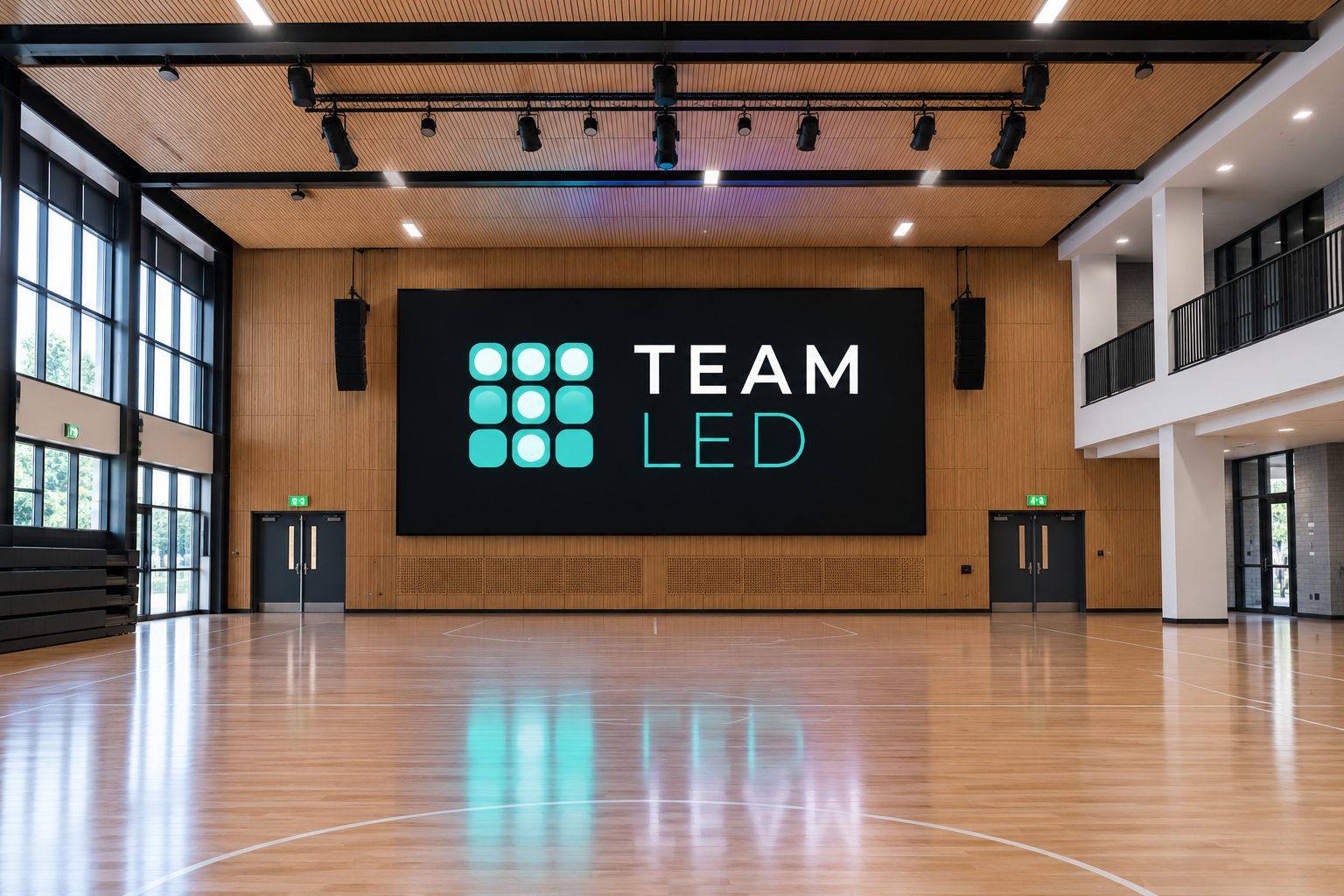
How Much Does a School LED Display Cost?
A straight answer for business managers and IT managers scoping a hall upgrade or a new build.
The cost of a school LED display varies more than most purchases a school makes. A small LED wall for a primary school assembly hall might come in around $30,000. A large LED video wall for a secondary school auditorium can go past $250,000. The gap is real, and it comes down to size, pixel pitch, brightness, sound and how involved the install is.
This guide explains what actually drives the number, so you can build a business case with realistic figures. All prices are indicative ranges in Australian dollars, excluding GST, and every install is quoted from its own drawings.
What drives the cost of a school LED display?
Five things move the price more than anything else.
1. Screen size
LED walls are modular and built from panels, commonly around 500mm x 500mm. A wall of 8 panels costs a fraction of a wall of 32. The right size depends on:
- Hall depth. People 15 metres away need a bigger image than people 8 metres away.
- What you’ll show. A text-heavy assembly slide needs less resolution than full-motion video at graduation.
- Shape. 16:9 suits standard video, while wider shapes suit split-screen or presentation-plus-camera layouts.
As a rule of thumb, the image height should be somewhere between one-sixth and one-eighth of the furthest viewing distance: closer to one-sixth for text-heavy slides, closer to one-eighth for video. For your quote, we size the image to your real seating using AVIXA’s image size standard.
2. Pixel pitch
Pixel pitch is the distance in millimetres between the LEDs. A lower pitch means a sharper image and a higher cost.
| Pitch | Typical use | Cost |
|---|---|---|
| P1.8 to P2.5 | Boardrooms and close viewing | Highest |
| P2.5 to P3.9 | School halls and indoor auditoriums | Mid |
| P4 to P6 | Large indoor venues and back-of-hall viewing | Lower |
| P6+ | Outdoor, sports grounds and signage | Lower per panel, but usually a bigger wall |
In a school hall where the closest person sits 4 to 6 metres away, P2.5 to P3.9 is typical. A handy rule is that the minimum comfortable viewing distance in metres is roughly the pitch number, so a P3 wall reads well from about 3 metres back. Going finer than you need adds cost without any visible improvement.
3. Brightness
Indoor LED walls typically run at 800 to 1,500 nits, while outdoor and semi-outdoor walls run at 5,000 nits or more. A hall with skylights or open sides sits at the top of the indoor range. Brightness affects which panels suit the room, and it affects the price.
4. Sound and control
An LED wall is a screen, not a system. Speakers, amplifiers, a mixer or processor, wireless microphones and a control panel are all quoted alongside it. On a typical school hall install, sound and control add 25% to 45% to the cost of the display on its own.
5. How involved the install is
The cost of getting the wall onto the wall varies a lot.
- Straight upgrade using existing cabling and mounting: the smallest addition.
- Structural mounting frame (steelwork or wall reinforcement): a mid-range addition.
- Rigging or a motorised drop: the biggest addition.
- New cabling from scratch (data, power and a dedicated circuit): a mid-range addition.
A hall with cabling left over from a previous projector often comes in noticeably cheaper than one that needs everything run from scratch.
Indicative cost ranges for school LED displays
These are typical installed ranges for the display only, in Australian dollars, excluding GST. Sound, control and infrastructure are quoted separately.
| Display type | Typical size | Indicative range |
|---|---|---|
| Small indoor LED wall (primary school assembly, close viewing) | 3m x 1.7m | $18,000 to $40,000 |
| Mid-size indoor LED wall (mid-size hall, viewing up to 20m) | 4.5m x 2.5m | $45,000 to $95,000 |
| Large LED video wall (secondary school hall, viewing up to 30m) | 6m x 3.4m | $80,000 to $180,000 |
| Auditorium LED wall (performance venue, edge-to-edge stage) | 8m x 4.5m+ | $160,000 to $350,000+ |
| Boardroom or meeting room LED | 2m x 1.1m | $22,000 to $55,000 |
Once sound, control, cabling and installation are added, expect the total for a hall to be about 1.4 to 1.5 times the display cost. That’s the number to put in your business case. The panels we choose also affect where in the range you land, and we’ll explain our recommendation in the quote.
LED vs projector: how the costs compare
Projectors cost less upfront, and LED walls cost less to run. Here’s how they compare over five years for a typical mid-size school hall.
| Cost | Projector + screen | LED video wall |
|---|---|---|
| Upfront hardware | $12,000 to $28,000 | $45,000 to $95,000 (installed) |
| Installation | $6,000 to $14,000 | Included above |
| Lamp replacements (five years) | $2,400 to $7,200 | $0 |
| Servicing (five years) | $6,000 to $12,000 | $5,000 to $10,000 |
| Downtime (lamps and failures) | Real, but hard to put a number on | Very low |
| Five-year total (indicative) | $26,000 to $61,000 | $50,000 to $105,000 |
These figures assume a lamp-based projector. Most new hall projectors use a laser light source with no lamps to replace, which makes the projector cheaper again over five years. LED still costs more over five years in a straightforward hall. The gap closes quickly in halls used every day, where lamps burn out again and again. For halls used occasionally, a projector is still the cheaper option. Our LED vs projector guide covers the full decision.
What’s included in a Team LED quote?
Our quotes for a school hall LED install list every part separately, so you can see exactly what you’re paying for. A typical quote covers:
- Display. Panel type, pixel pitch, dimensions, brightness and warranty.
- Mounting. Structural frame, wall brackets or a motorised drop.
- Sound. Speakers, amplifier, processor, wireless microphones, cabling and installation.
- Control. Touch panel or wall controller, control processor and programming.
- Sources. HDMI wall plates, wireless casting receivers and media players.
- Cabling. Data, power and structured cabling.
- Installation. Site work, testing and commissioning.
- Handover. Staff training, documentation and service agreement options.
Each line has its own price, which makes it easy to take to approval.
How are quotes usually requested?
Most Queensland schools buy AV through one of three routes:
- Standing offer arrangement. Panel pricing, and often the quickest route for smaller installs.
- Request for quote. Two or three suppliers quote against a written scope. This is the usual route for projects between roughly $20,000 and $250,000.
- Open tender. Above the tender threshold, or when the school board prefers it.
A good scope describes the result you need rather than naming a brand and model. For example: the image is readable from row 20 in any lighting, sound is even across the hall, and a non-technical staff member can run it with one touch. That way each supplier can propose the best-fit solution and be compared on price, fit and ongoing support, not just on matching a spec sheet.
Common mistakes that push costs up
These five mistakes regularly push the final invoice well above the original quote.
- Forgetting cabling and power. A quote that assumes the existing cabling will work usually changes once the work starts. Get cabling checked at the site inspection.
- Under-doing the sound. A big screen with weak sound usually means a second install within two years. Quote the sound at the same time as the display.
- Choosing a finer pitch than you need. Buying P1.8 for a hall where the closest person sits 8 metres away adds 30% to 60% to the display cost with no visible benefit.
- Skipping the controls. Without a proper touch panel, teachers can’t use the system. What follows is either a second spend to fix it or a screen that sits idle.
- No service plan. A hall system that’s never serviced slowly gets worse. Budget servicing into your running costs from year one.
These ranges assume standard cabling and mounting. Halls with acoustic issues, difficult ceiling access or long cable runs sit at the top of each range.
Frequently asked questions
How much does a school LED display cost in Australia?
Indicative ranges for the display only, excluding GST: small primary school walls $18,000 to $40,000; mid-size hall walls $45,000 to $95,000; large secondary school hall walls $80,000 to $180,000; full auditorium walls $160,000 to $350,000 or more. The total installed system (with sound, control and cabling) is typically 1.4 to 1.5 times the display cost.
What does an LED video wall for a school cost?
A mid-size LED video wall for a school hall (around 4.5m x 2.5m, viewing up to 20m) typically costs $45,000 to $95,000 for the display alone. With sound, control, cabling and installation, the total for that size of hall usually lands between $65,000 and $140,000.
Is an LED display cheaper than a projector?
Not upfront. A projector and screen for a school hall costs $18,000 to $42,000 installed, compared with $45,000 to $95,000 for an equivalent LED wall. Over five years the gap narrows, because projector lamps need replacing every three to five years while LED walls run 80,000+ hours without consumables. In halls used every day, LED often catches up by year four or five.
What’s the difference between P2.5 and P3.9 for a school hall?
Both are common indoor pitches. P2.5 gives a sharper image and reads well from about 2.5 metres back. P3.9 reads well from about 4 metres back and costs less per square metre. For most halls, where the closest person sits 4 to 8 metres from the screen, P3 to P3.9 is the right balance of image quality and cost.
Do LED wall prices include installation?
Not always. A hardware-only quote covers the panels, the controller and cabling to the wall. Installation (structural mounting, cabling from the source to the screen, and commissioning) is often a separate line worth 20% to 35% of the display cost. Always ask for a fully installed price. Ours always are.
What ongoing costs come with a school LED display?
Annual servicing ($1,500 to $4,000 for a mid-size hall), the occasional replacement remote or cable, microphone batteries or replacements for the sound system, and any warranty extension beyond the standard two to three years. The LED panels themselves have no consumable parts and typically run 80,000 to 100,000 hours before brightness starts to drop.
Can state schools buy an LED display through existing arrangements?
State schools can often buy AV through standing offer arrangements with approved suppliers, or through a request for quote below the tender threshold. Independent and Catholic schools set their own purchasing policies. Your business manager is the best person to confirm the right route before scoping.
How much should we budget for a full hall install?
For a mid-size hall (200 to 500 seats), a full LED-based install with sound and control usually lands between $65,000 and $140,000. For a large secondary hall or auditorium (500 to 1,000+ seats), $120,000 to $260,000. The final price depends on hall size, ceiling height, existing cabling, acoustics and the panels chosen.
Can we spread the cost across several financial years?
Yes. A common approach is the display and controls in year one, sound in year two, then extra wireless microphones and streaming in year three. Designing the year-one controls with room to grow means later stages don’t require a new controller. It spreads the cost and lets your school see the benefit before the next stage.
Talk to Team LED
One team handles the whole job, from design to commissioning. Tell us about your venue and we’ll take it from there.